 CONNECT THE VIRTUAL WORLD
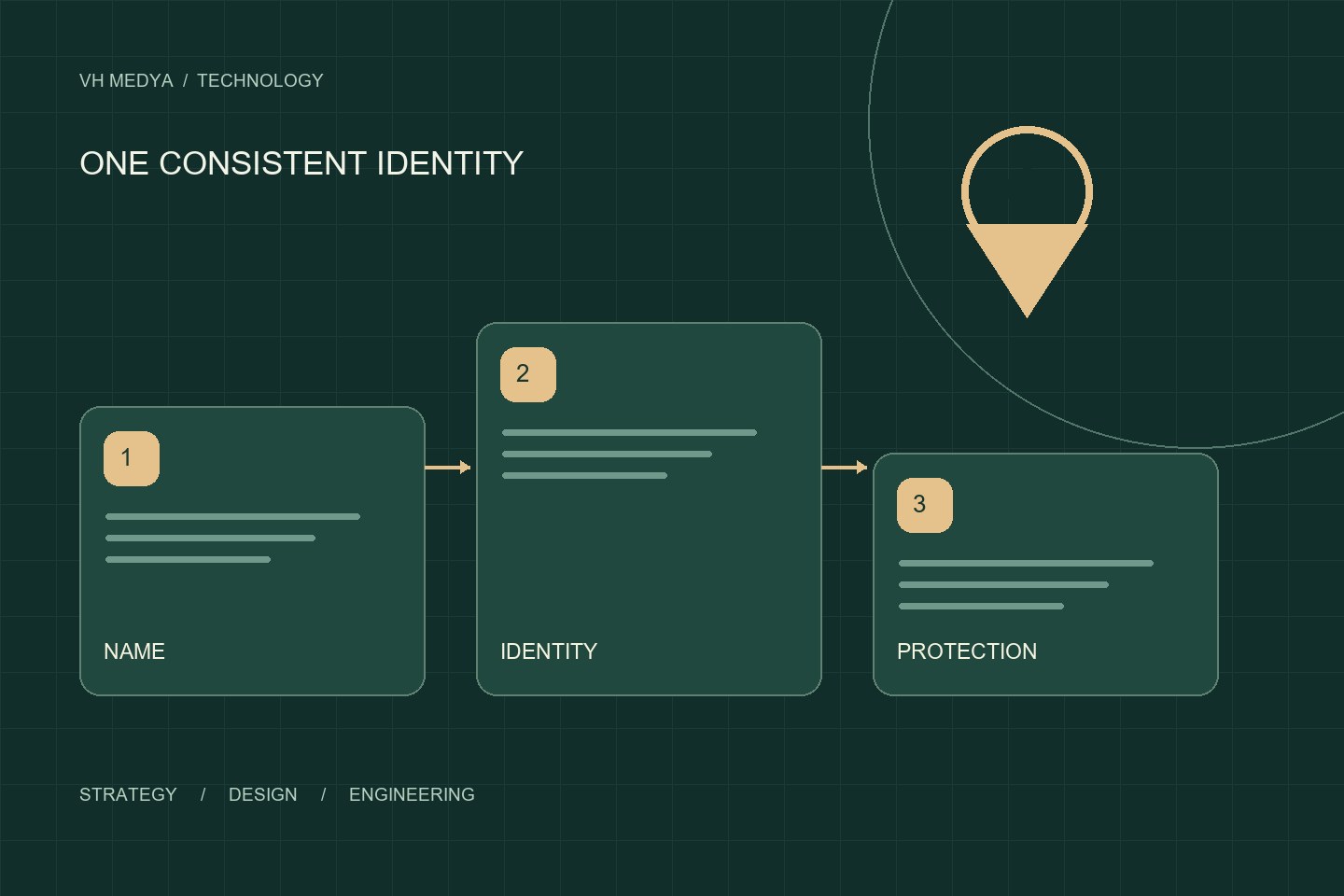
Digital preparation for trademark registration organises the names, domains and visual assets through which a brand appears online. VH Medya's contribution concerns the digital inventory and examples of actual use. Legal assessment, classification and official filing need to be handled by an authorised trademark professional or other suitable expert. Commissioning a website or registering a domain should not be presented as proof of trademark rights.
Build a clear digital asset inventory
The initial record identifies brand names, spelling variations, logos, domain names and social profile addresses. Different names across different channels can confuse customers and create unnecessary production work. Old logos, unused accounts and previous domains are marked separately. Internal responsibility and renewal dates can also be documented. Credentials and private access information do not belong in a public inventory or website page.
The inventory helps identify inconsistencies before new content is produced. It can establish how an approved brand name should appear in text, imagery, profile descriptions and email signatures. Symbols or wording with legal implications should not be added without an appropriate basis. Where registration status is unknown, the website should not claim that the mark is registered. The business's current products and services are recorded according to their actual scope rather than an assumed future offering.
Prepare information for professional review
A preparation file can include examples of current use, planned business activities and the relevant digital channels. Each example should have a source and date. This makes it easier for the professional to understand the context; it does not predict whether an application will succeed. Decisions about countries, legal protection and filing classes are not assumed by the technical team. A digital availability check cannot replace the specialist assessment required for the particular case.
When a new brand name is being considered, domain availability and legal suitability remain distinct questions. An available domain does not establish that the name can be used as a trademark. The same limitation applies to an available social username. Website design and content production can be scheduled around these dependencies, reducing the risk of extensive rework if the proposed name changes after professional review. The aim is a better organised preparation process, not an unsupported legal conclusion.
Apply the agreed identity consistently
Once the appropriate usage has been established, it can be reflected in website headings, contact information and suitable social profiles. The relationship between a trading brand and the company's legal name should be understandable. Organisational structured data reflects verified identity, and unconfirmed profiles are not added as identity references. Rebranding may also require a technical migration plan for old domains, valuable URLs and existing links.
For example, a company using two spellings of its brand can first identify which assets use each variation. Following the relevant professional review, the approved usage can be applied consistently to the new website and profile descriptions. Deliverables may include the asset inventory, a list of access gaps and the required digital updates. Success is assessed through accurate preparation and consistent implementation, rather than assuming a legal outcome. Questions requiring an individual legal interpretation remain with the appropriate authorised professional.
Scope, delivery and next steps
The initial discussion establishes the business need, existing systems and intended outcome. Included work, access dependencies and the information or approvals required from the client are recorded clearly. The proposal considers responsibility for updates and maintenance alongside the first delivery. This gives everyone a shared understanding of what will be assessed and when a deliverable can reasonably be considered complete.
Implementation is divided into manageable steps with practical acceptance criteria. Each result is checked through a realistic usage scenario. Missing access or unavailable data is recorded as a limitation rather than presented as a measured outcome. Delivery distinguishes the action taken, the evidence observed and any remaining verification. Further improvements are prioritised by value, effort and dependencies. To discuss your project, share your website, the service that matters most and the problem you want to resolve. Private credentials do not need to be included in the initial message; an appropriate access method can be arranged within the agreed scope.