 CONNECT THE VIRTUAL WORLD
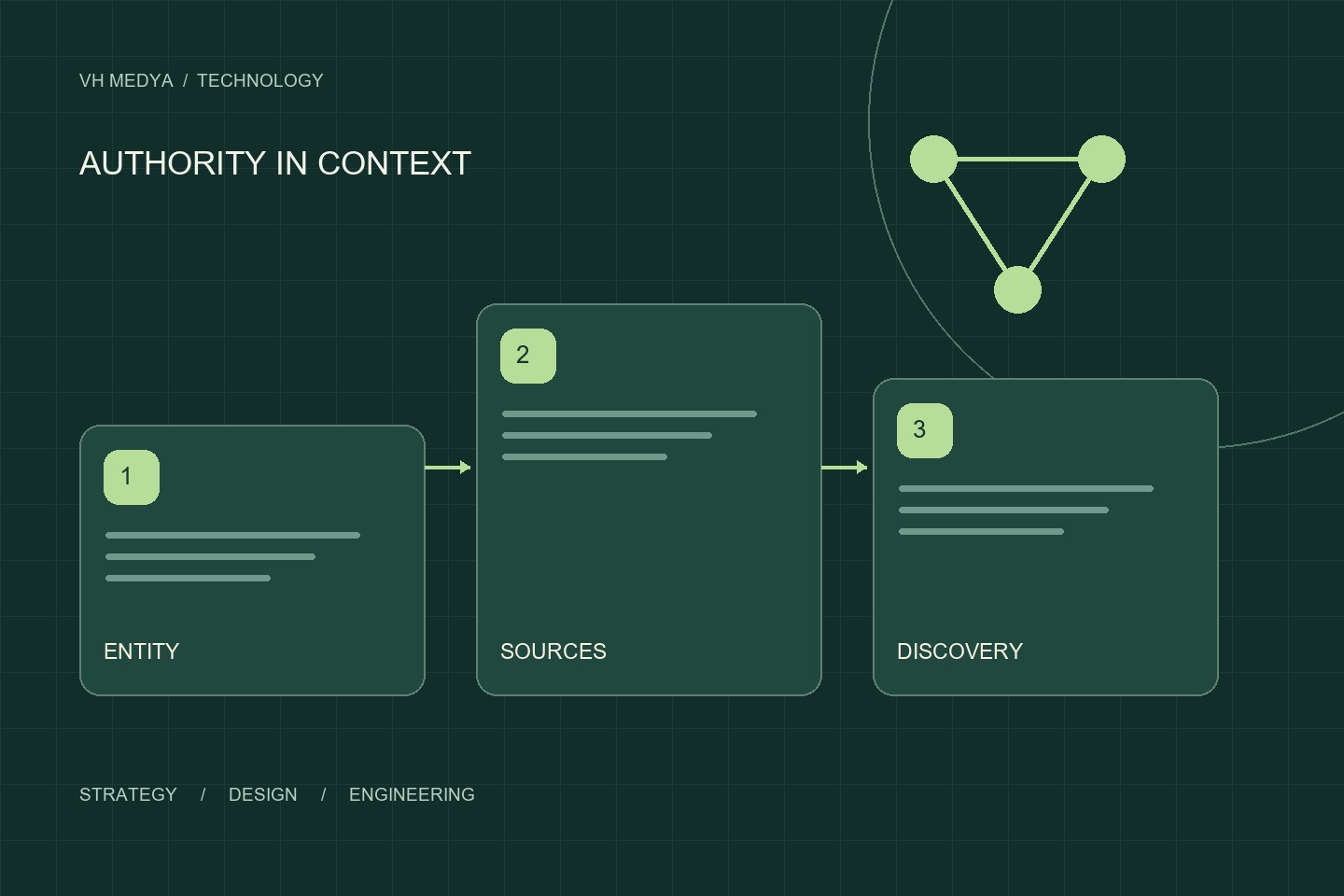
AI visibility examines how a brand is discovered, interpreted and connected with sources in AI-assisted search and answer systems. Terms such as GEO and AEO describe related aspects of this work. VH Medya focuses on technical access, clear information and verifiable organisational identity. Whether a system recommends a company or cites a page is not directly controlled by the website owner and cannot be guaranteed.
Make the source understandable and useful
The foundation is an accessible website with meaningful information. Important services need distinct explanations of what is offered, who it is for and the boundaries of delivery. Opening paragraphs answer the central question directly, with supporting detail organised under useful headings. Original examples and verifiable references offer a stronger information base than repeated promotional claims that provide little help to a person evaluating the service.
Organisational identity should remain consistent across the website and verified external profiles. A named author or expert should be genuinely responsible for the content. Biographies, years of experience, awards and statistics must not be fabricated to strengthen the appearance of authority. Structured data reflects visible facts. Relationships between the organisation, a page and a service can be expressed clearly without assuming that a very large schema graph is automatically beneficial.
Review crawler rules and supporting publications
Robots rules, page-level directives and HTTP headers are considered together. AI crawlers have different purposes, so access decisions require current official documentation rather than one rule applied indiscriminately. Sensitive content needs actual authentication and access control. Allowing or blocking a crawler does not establish whether a particular answer product will use the brand. Without relevant server logs, verified crawler visits remain an unmeasured area.
LLMS files may provide a supplementary summary and directory of published information. Private, draft and password-protected material is excluded. A file being accessible does not prove that an AI system has read or used it. A special LLMS file is not assumed to be a requirement for Google's AI search features. Established SEO foundations, indexable information and useful explanations remain central to the work rather than being replaced by a new label.
Record observations with their limitations
Sample questions are selected around the intended customer, service and language. The review records the date, system and sources actually observed. Answers may differ by time, location and session, so one screenshot is not presented as a comprehensive share-of-visibility measurement. A brand mention, an outbound link and an explicit source citation are distinct observations. Competitor comparisons are meaningful only to the extent that the conditions can be kept reasonably consistent.
For example, a custom software page that says only “innovative solutions” can be improved by explaining the workflows covered and how delivery is validated. Relevant answer-system observations can then be recorded over time. Reporting first describes the implemented access and content improvements; citations are reported only when genuinely observed. The Synapse Authority perspective provides an organisational framework for that evidence-led work, without implying that every platform module is automatically connected or functioning for every client.
Scope, delivery and next steps
The initial discussion establishes the business need, existing systems and intended outcome. Included work, access dependencies and the information or approvals required from the client are recorded clearly. The proposal considers responsibility for updates and maintenance alongside the first delivery. This gives everyone a shared understanding of what will be assessed and when a deliverable can reasonably be considered complete.
Implementation is divided into manageable steps with practical acceptance criteria. Each result is checked through a realistic usage scenario. Missing access or unavailable data is recorded as a limitation rather than presented as a measured outcome. Delivery distinguishes the action taken, the evidence observed and any remaining verification. Further improvements are prioritised by value, effort and dependencies. To discuss your project, share your website, the service that matters most and the problem you want to resolve. Private credentials do not need to be included in the initial message; an appropriate access method can be arranged within the agreed scope.