 CONNECT THE VIRTUAL WORLD
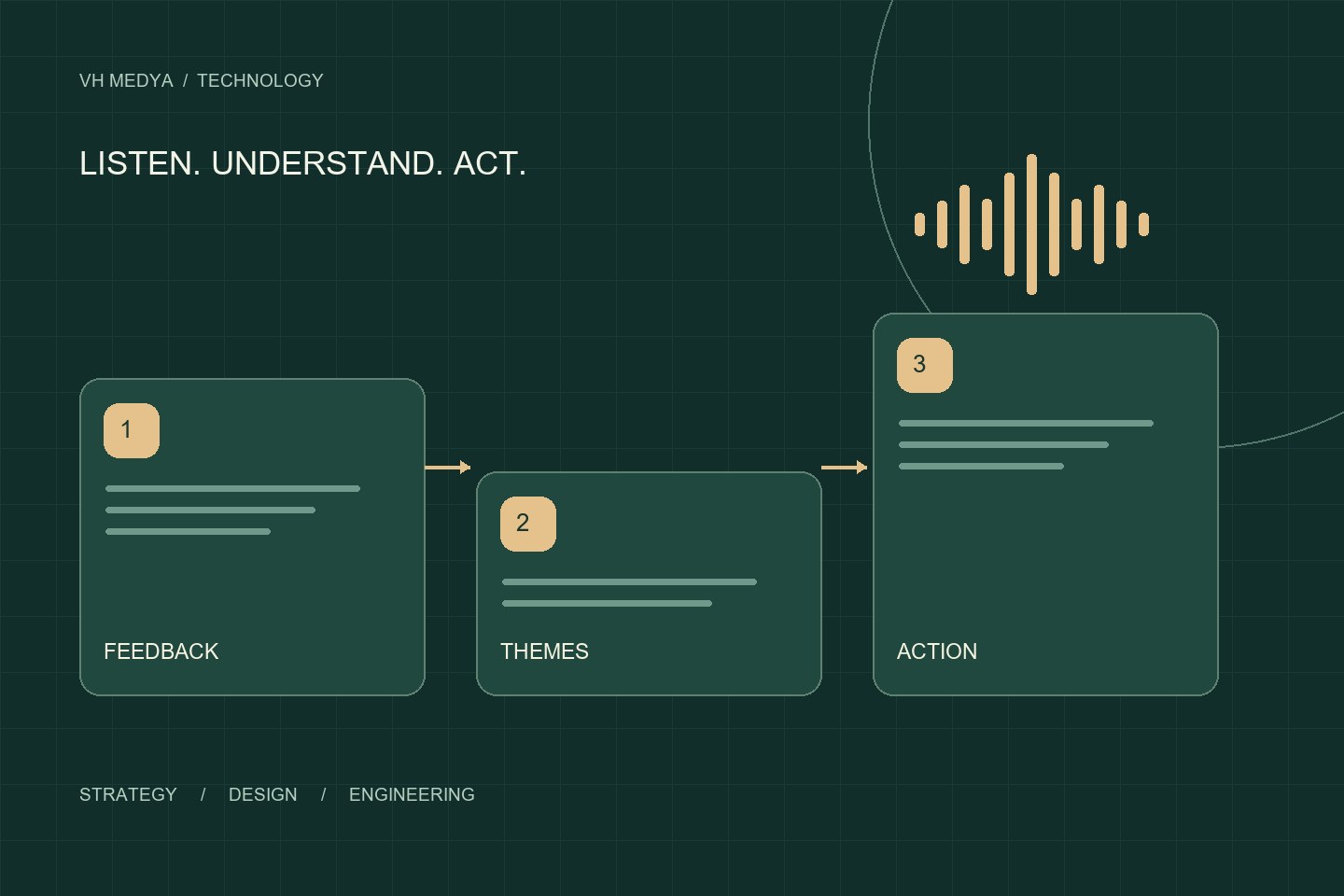
Customer voice analysis investigates recurring needs, expectations and problems in comments and feedback. VH Medya combines the Derya AI and Synapse Voice perspective with data cleaning, topic grouping and human review. A positive, negative and neutral chart cannot explain the whole customer experience. The useful result is an evidence-based account of which issues deserve action and how the organisation can respond.
Define what the dataset represents
The platforms, date range and content included in the analysis need to be explicit. YouTube comments and customer-support records represent different samples. Accessible comments should not automatically be treated as representative of every customer. Collection follows supported methods and appropriate authorisation. If private messages or customer records are involved, access and data preferences need separate consideration. Public availability does not mean information can be reused without limits or context.
Cleaning may identify duplicates, spam, link-heavy messages and irrelevant material. Removing genuine criticism simply because it is negative would distort the findings. The rules, number of exclusions and reasons should remain visible. Abbreviations, irony and comments containing several topics can challenge automated classification. A human-reviewed sample is therefore useful, and uncertain interpretations should be marked instead of being forced into a confident-looking category.
Move from sentiment to practical topics
A customer can praise a product while criticising delivery in the same comment. A single sentiment label may lose that distinction. Topic groups such as product quality, pricing, communication, delivery and usability are defined around the business's context. Their meanings need to remain consistent across the dataset. Representative examples can clarify what each category captures, with unnecessary personal information removed from the report and any published examples.
The output should lead beyond a chart. A recurring question may justify a clearer website explanation, while repeated complaints may reveal an operational issue. Brand voice and approval responsibilities are established for response drafting. An automated system does not make payment, contractual or customer-resolution decisions without the relevant verification and authority. Critical cases are escalated to a responsible person. This connection between findings and action can also make the content plan more useful to customers.
Explain quality and comparison limits
The report identifies the source, record count, time period, cleaning rules and limitations. When comment volumes differ substantially, comparing percentages alone can mislead. A changed campaign or product mix may also affect the context. Classification errors should not be hidden behind precise-looking charts. Consistency can be reviewed through a suitable sample, but an accuracy percentage is not published unless it has actually been measured using an appropriate method.
For example, repeated feedback that product descriptions are incomplete may lead an e-commerce business to improve dimensions, materials and usage guidance. Similar questions and support requests can then be observed over time. That comparison may help assess the change without proving that every movement was caused by it. The purpose is to make the customer's problem visible and manageable, rather than simply turn a large volume of comments into an attractive presentation with no clear owner or next step.
Scope, delivery and next steps
The initial discussion establishes the business need, existing systems and intended outcome. Included work, access dependencies and the information or approvals required from the client are recorded clearly. The proposal considers responsibility for updates and maintenance alongside the first delivery. This gives everyone a shared understanding of what will be assessed and when a deliverable can reasonably be considered complete.
Implementation is divided into manageable steps with practical acceptance criteria. Each result is checked through a realistic usage scenario. Missing access or unavailable data is recorded as a limitation rather than presented as a measured outcome. Delivery distinguishes the action taken, the evidence observed and any remaining verification. Further improvements are prioritised by value, effort and dependencies. To discuss your project, share your website, the service that matters most and the problem you want to resolve. Private credentials do not need to be included in the initial message; an appropriate access method can be arranged within the agreed scope.