 CONNECT THE VIRTUAL WORLD
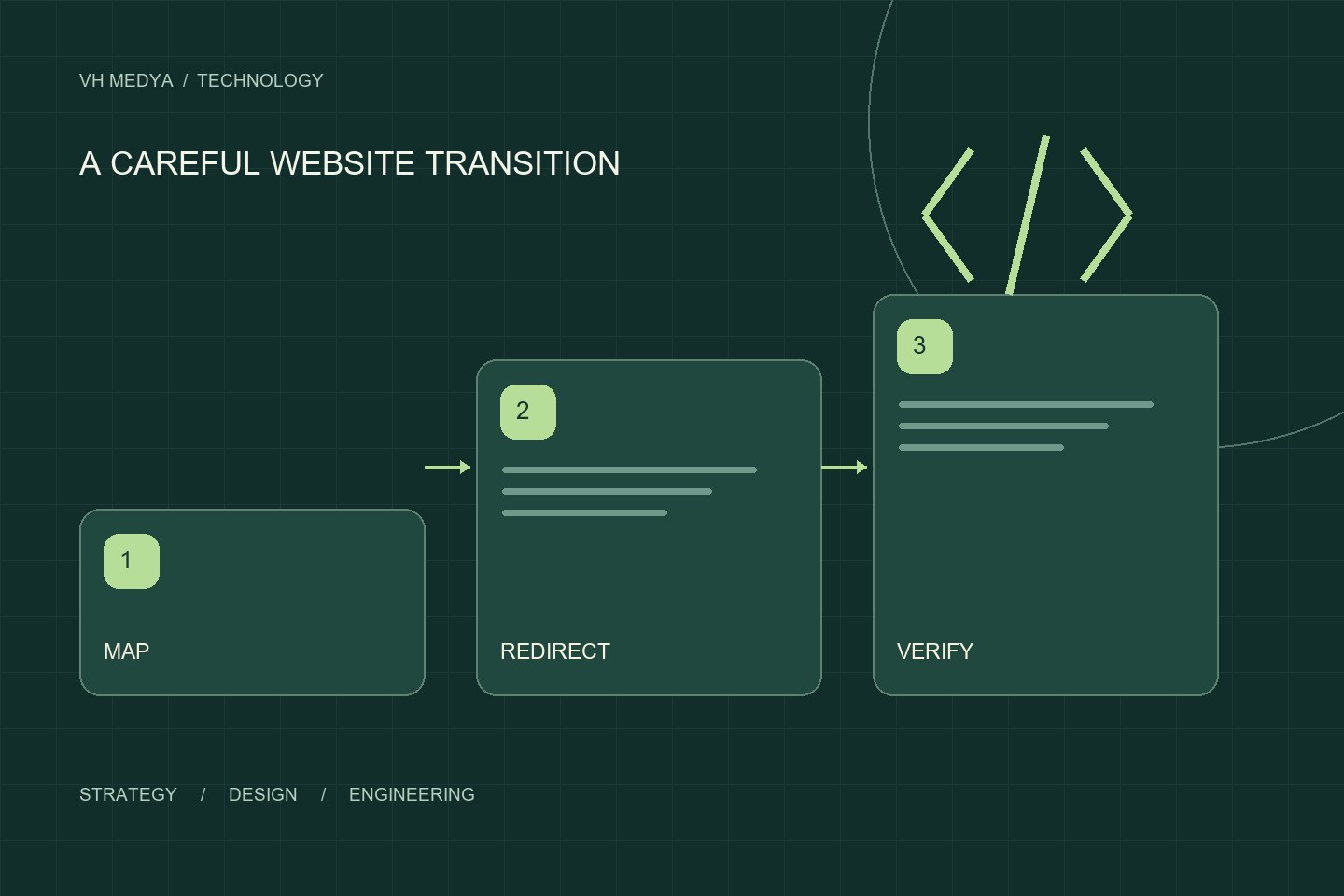
A website redesign and a change to the URLs known by search engines are different kinds of work. A new design may look successful while important pages disappear, links break or content becomes difficult to access. Migration planning therefore belongs at the start of the project, rather than being treated as a final detail after the visual work is complete.
Record the existing website
Begin with an inventory of published pages, important images and the current URL structure. Authorised Search Console data can identify pages receiving impressions and clicks. Relevant incoming-link evidence, where available, may reveal other valuable addresses. Without this context, a page removed as apparently unused could be an important customer entry point. Back up content and relevant settings before release, recording exactly what the backup includes and how recovery would work.
Decide what happens to each old address
Keeping useful addresses is often the simplest approach. Where a URL must change, identify the genuine equivalent and create an appropriate permanent redirect. Sending every old address to the home page does not answer the original visitor's need. Removed content without a useful replacement may require an appropriate error response. Internal links and the sitemap should reflect the new structure, with unnecessary redirect chains avoided.
Separate pre-release checks from monitoring
Before release, verify that important information is available in readable HTML and that canonical URLs and language relationships are correct. Staging noindex rules or access restrictions must not accidentally remain on the live website. Test navigation, contact routes and forms on mobile. Pressing a form button is not enough: the successful delivery result needs verification. Similarly, a visible analytics tag does not establish accurate reporting.
After release, review important new URLs and representative old addresses. Search Console indexing, canonical and error evidence can then be monitored at suitable intervals. Not every report will update immediately. If a problem appears, use the agreed repair or rollback procedure. Preserve the baseline, release date and follow-up observations together so the effect can be assessed with context.
Define the content approver, technical owner and release responsibilities before the change. Each acceptance item should have evidence or an explicit limitation, preventing delivery from relying only on the observation that the home page opens.