 CONNECT THE VIRTUAL WORLD
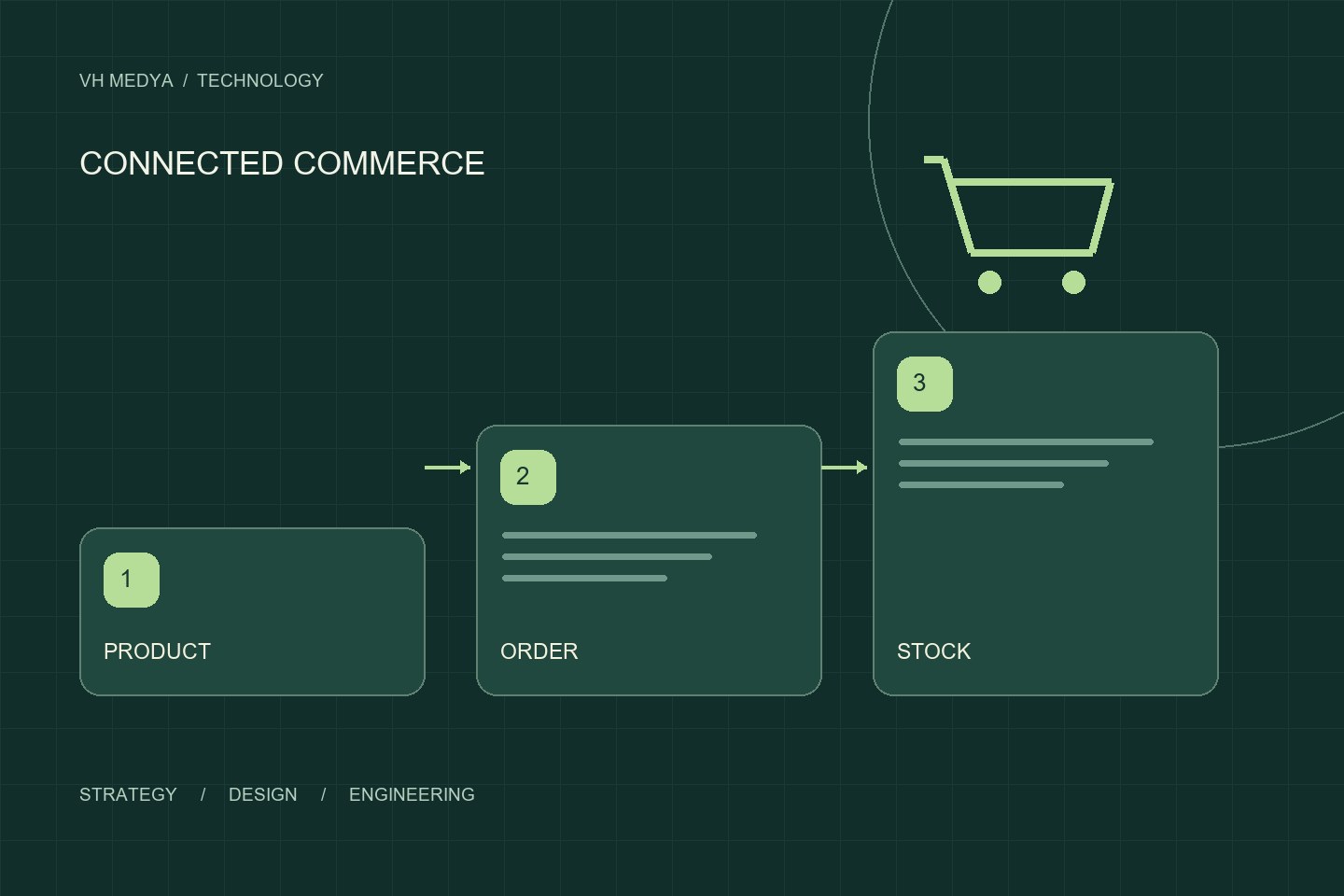
E-commerce development connects product discovery with inventory, payment, fulfilment and customer communication. A shop needs more than attractive product cards: visitors must understand what they are buying, see accurate availability and complete checkout confidently. VH Medya plans the storefront and operational connections together, selecting an approach around catalogue complexity, order volume and the systems the business already uses.
Make the catalogue useful to customers
The work begins with product information. Categories, variants, brand names, specifications, dimensions and stock identifiers need a consistent structure. Creating unnecessary separate pages for every colour can fragment the catalogue, while repeating one description across every item provides little help to buyers. Useful product pages explain the differences that matter, show appropriate images and provide accurate information about delivery and availability.
Category pages with a meaningful product selection can address a distinct shopping need. Filters are assessed for customer value and for the number of URLs they generate. Not every filter combination deserves to become a search landing page. Canonical, crawling and indexing decisions depend on the page type and actual catalogue behaviour. Temporarily unavailable products also require a different approach from permanently discontinued items, particularly when an existing page has useful information or incoming links.
Connect checkout with operations
Checkout should make the total price, required information and delivery conditions understandable before commitment. Long mobile forms, unexpected charges and vague errors can interrupt the purchase journey. Payment and shipping connections use supported integration methods. Before release, we review successful payment, declined payment and order confirmation through an appropriate test environment or controlled test process. A visible confirmation message alone is not enough to establish that the order reached the operational system correctly.
For stock, accounting and marketplace connections, the source of truth must be defined. If two channels sell the same item, responsibility for updating availability cannot remain ambiguous. API failures, repeated notifications and timeouts need logging and a controlled retry approach. Installation does not establish ongoing reliability: sample orders and stock changes should be compared across the connected systems. Permissions are limited to what the integration actually needs, and sensitive credentials are kept outside public content.
Measure commercial outcomes accurately
Product and category information should be available in readable HTML with crawlable internal links and appropriately sized images. Structured data must reflect the visible product, price and availability. Reviews cannot be invented to obtain a search feature. Turkish and English product content should explain the offer naturally for its audience, including currency and delivery limitations where these affect the buying decision.
A catalogue with many variants can begin with a small pilot group. Product import, option selection, stock reduction and order handling are verified before the rollout expands. Analytics distinguishes product views, additions to cart, checkout starts and completed purchases. The same transaction should not be counted repeatedly when a confirmation page is refreshed. Revenue, refunds and customer quality provide a more useful picture than an isolated increase in visits or cart clicks, helping the business prioritise improvements that affect the whole shopping experience.
Scope, delivery and next steps
The initial discussion establishes the business need, existing systems and intended outcome. Included work, access dependencies and the information or approvals required from the client are recorded clearly. The proposal considers responsibility for updates and maintenance alongside the first delivery. This gives everyone a shared understanding of what will be assessed and when a deliverable can reasonably be considered complete.
Implementation is divided into manageable steps with practical acceptance criteria. Each result is checked through a realistic usage scenario. Missing access or unavailable data is recorded as a limitation rather than presented as a measured outcome. Delivery distinguishes the action taken, the evidence observed and any remaining verification. Further improvements are prioritised by value, effort and dependencies. To discuss your project, share your website, the service that matters most and the problem you want to resolve. Private credentials do not need to be included in the initial message; an appropriate access method can be arranged within the agreed scope.