 CONNECT THE VIRTUAL WORLD
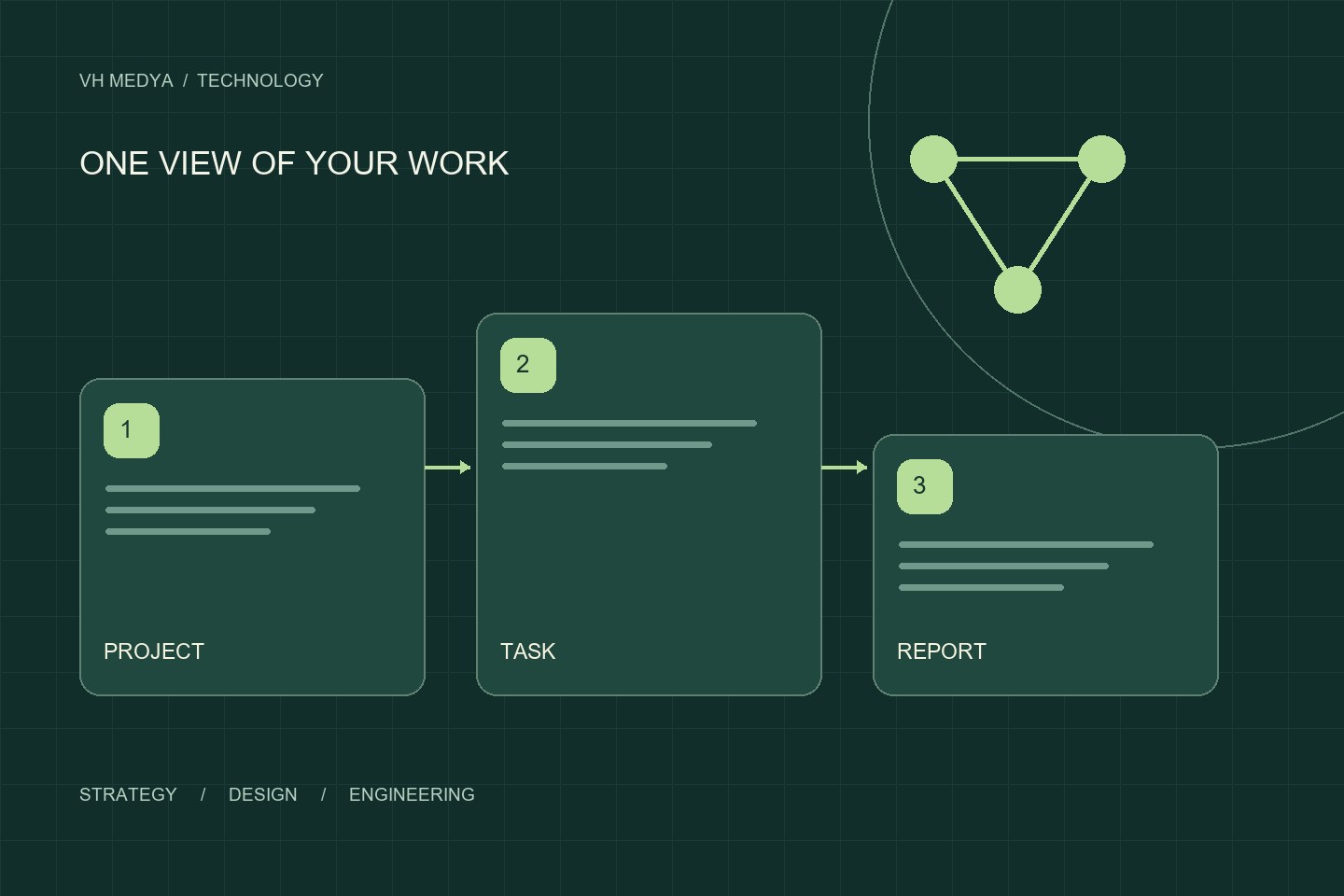
A client portal organises project information, deliverables and approvals in a workspace available to the appropriate people. VH Medya uses the Synapse Pulse perspective to treat reporting as a starting point for action, rather than only a presentation of past activity. Not every client needs the same dashboard. The structure follows real responsibilities and workflows; adding fields that nobody can maintain does not create operational clarity.
Establish a reliable source for decisions
Discovery examines where files are stored, who approves work, how deadlines change and where the latest decision is recorded. Repeated information across email, messaging and spreadsheets can then be identified. The portal does not necessarily replace every existing tool. Its role may be to provide a reliable source for delivery and decision status while keeping established specialist systems in place. Users should not need to understand implementation details to complete ordinary tasks.
Relationships between projects, tasks, reports and files need to be clear. Each action can show an owner, state, dependency and expected output. The meaning of “completed” is agreed in advance: uploading a document and receiving client approval are different states. A delayed task should explain the obstacle and required decision rather than merely change the colour of a card. Dependencies on client feedback remain visible alongside the team's own responsibilities.
Make reports support decisions
In an SEO, content or development report, the action taken, verification evidence and business outcome are separate. Submitting a sitemap, having it read and observing a URL indexed are different stages. They should not collapse into a single green indicator. Unmeasured areas remain explicit. Dates and source details provide enough context for the user to understand how current a finding is and what evidence supports it.
The report summary should serve the decision-maker. Technical detail can remain available, while the main view explains the priority issue, recommended action and dependencies. Data from different sources needs compatible periods and definitions. Automated reporting does not mean incoming values can be accepted without checks. Missing connections, delayed data and incomplete coverage should be visible rather than hidden behind a complete-looking dashboard.
Design permissions and notifications around the work
Each client should see only the relevant records. Client representatives, delivery staff and administrators have different access needs. File links require appropriate access controls; an address being difficult to guess is not a security boundary. Unnecessary personal information and sensitive documents are kept out of routine reporting views. Approval history, change records and backup responsibilities are defined according to the workflow's requirements.
For example, a monthly SEO project can let the client approve proposed article topics while the team tracks technical repairs. Each deliverable, its verification and the following action stay connected with the same project. Notifications can focus on decisions or interventions rather than interrupting people for every minor update. A limited pilot with a small client group can test whether users find the correct version, understand pending approvals and recognise the next task. Those outcomes provide better evidence of value than simply demonstrating that a dashboard loads.
Scope, delivery and next steps
The initial discussion establishes the business need, existing systems and intended outcome. Included work, access dependencies and the information or approvals required from the client are recorded clearly. The proposal considers responsibility for updates and maintenance alongside the first delivery. This gives everyone a shared understanding of what will be assessed and when a deliverable can reasonably be considered complete.
Implementation is divided into manageable steps with practical acceptance criteria. Each result is checked through a realistic usage scenario. Missing access or unavailable data is recorded as a limitation rather than presented as a measured outcome. Delivery distinguishes the action taken, the evidence observed and any remaining verification. Further improvements are prioritised by value, effort and dependencies. To discuss your project, share your website, the service that matters most and the problem you want to resolve. Private credentials do not need to be included in the initial message; an appropriate access method can be arranged within the agreed scope.